
When we started researching our first road trip to Baja California, Mexico, we were given a lot of information that was hard to follow. Did we need this, or that, or was it different from mainland Mexico. The questions kept coming and with more information, came even more questions. It is a little different with an RV, if you want to be there more than 7 days or drive farther than a certain distance into the country. There is also a difference if you are on mainland or in Baja.
We wanted to write a post that was right to the point and the easiest to figure out what you need to cross the border in your RV. This also includes what you should not bring across the border. To confirm this is for Baja California Mexico, not mainland Mexico as there are further rules and regulations.
Quick fact. The land that most people reference as Baja is officially called the Baja California Peninsula. There are two states within the peninsula. Baja California (sometimes referenced as norte) and Baja California Sur.
Planning Your Road Trip to Baja California Mexico
Before you head to the border, there are a few things that you will need to take care of. Plus a few tips at the bottom!
❖ Insurance in Mexico
When you have decided when you are going to cross the border and for how long, your first task is to get insurance from a provider in Mexico. Most US insurance companies will not cover you once you leave the country. There are a few companies that offer car insurance while you are in Mexico. We decided to use Baja Bound. After reading reviews and getting recommendations from other RVers, we bought insurance for 3 months. I am not able to give advice regarding insurance but we got full coverage for 3 months. They offer it in shorter and longer terms.
❖ Getting a Pet into Baja California
As of December 2019, animals do not need a health certificate. There are multiple accounts of what has happened at the border from not even mentioning the animal to asking to see vaccination certificates to just a visual inspection. I would have your shots up to date. We went through without anyone interested in checking on papers or our pup. See below for getting your pet back into the US.
❖ Documents Needed to get into Mexico
Documents to get through the border and to the official offices of Mexico where you get further documentation are as follows:
Car insurance from a provider in Mexico
RV/Car registration
Drivers License
Passport
FMM – Read below about this. I would not suggest doing it ahead of time online.
*PRO TIP: Make sure to have copies of all of these. Other than the official offices at the border, you should offer copies. Make color copies, cut and laminate them.
❖ Pesos
It is easier to just get pesos at your local bank before you head over. Also better to have more pesos than USD laying around your RV. Split them up and have them in different places throughout the RV that are not conspicuous. We used cash a lot but if you can use a credit card, I would do it as the rates were always better.
❖ Download iOverlander
This app is the best for international travel. Find camping, propane, tips on border crossings and attractions.
❖ Things to Leave Stateside
This is quite important if you do get searched. You should make sure that your fridge has no vegetables, fruit or raw meat. Then your RV should not have any guns or weapons, drugs or more than $10,000 in cash.
Crossing the border into Baja California
Decide which crossing you want to do. There are a few main crossings: Tijuana, Tecate and Mexicali East. There are a few more east of these coming from Arizona, but we head good things about Mexicali East, so we decided to cross into Baja Mexico there.
❖ Arriving at the Border
As you get closer, just follow the signs and then got into one of the two lanes on the left for nothing to declare. We arrived at around 9:30am and had no wait. You have to stop and then someone will wave you over to the right to inspect your vehicle. They say hello and ask you to open the back. This is the point where someone may ask you for your car registration. They did not ask us. Someone enters your rig to inspect. I have heard stories from the easiest, where they pop their head in and leave, to where they actually remove items to search. We had a very easy inspection twice. The officer entered our rig and opened every door and then said, “okay, bye.” That was it!
❖ FMM
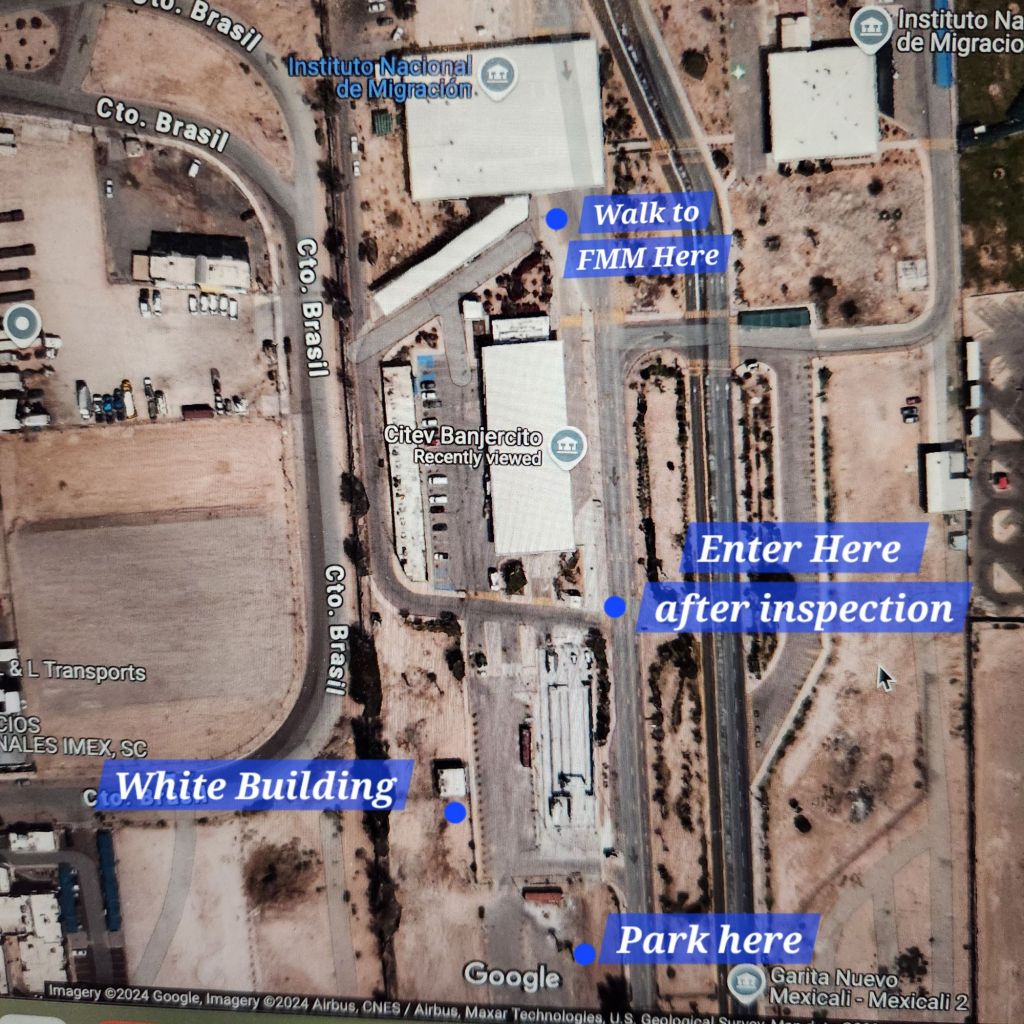
This is where a few people get confused. No one tells you that you need to get this but you should. More so for piece of mind and if you don’t have it, they can give you a hefty fine. But this step has very little information out there. Once you leave inspection, take your first right into a parking lot. You will need to park here with your bigger rig to get your FMM. There is a very white building that says Banjercito. Park near here if you have a bigger rig. Then you have to walk to the building and not the building on google that says Banjercito. It is actually the building titled: Instituto Nacional de Migración. See image. Another tip that is important is to not do it online beforehand. A lot of people do this and then still end up paying again because either their computer doesn’t work to check your confirmation or they just don’t want to. It didn’t take that long to get it.
❖ Leaving Border
As soon as you get your FMM you are good to go! If you are headed to San Felipe make sure to take a right out of the area at the T in the road. There are signs that say left and right. Take a right. Then enjoy all the tacos you can!
Crossing the border back into the United States
**Crossing with a dog. If you have a dog or you adopt a dog in Baja Mexico, there are a few things that most people will tell you that you need to get them into the United States.
❖ They must be at least 6 months. All shots need to be up to date. The pup must be microchipped. The biggest one we were told is that they needed a screw worm exam. Only certain vets are authorized to do this and it costs between $70-100 USD. This is a United States requirement, not a Mexico requirement. We made sure we had everything and as you will read below at the Mexicali East crossing we were not even asked if we had a dog.
Tecate Border Crossing: MUST READ IF YOU ARE CROSSING INTO THE UNITED STATES AT THE TECATE CROSSING!!
We decided to cross back into the US at a different crossing. We read a lot about this cross and this is a must if you decide to cross at Tecate. If you follow google to the crossing, you will be rerouted. This will take you to the right and you will have to find your way back to the main road. You will pass Walmart on your left and then it will take you to a dead end where you will take a left to get into the line to cross the border. If the line is farther down the road to your right. DO NOT TAKE A LEFT. Even if a car waves you in. Do NOT cut the line. There are bike cops there that are relentless and will actually give you a ticket, take you to the station or have you go to Walmart to grab cash. If there is no line, then, yes, take a left. If there is a line, take a right. Farther down the road you can take a U turn but just be aware this is where another cop may try and harass you. We made a U turn and a cop pulled us over. We kept saying we didn’t do anything wrong and that we couldn’t understand him and he finally let us go as 5 other cars made a U turn. Otherwise, you can take a right, left and left to get back on the road to get into line. The line moves faster than you may think, but can take up to a couple hours.
Big rigs, RVs will go to the left when you make it to the border. We got asked a few questions and then they let us on our way.
Mexicali East Crossing – This crossing was quite easy as well. Initially, if you are in a big rig, you are required to go to the right. You are not allowed to use any of the fast pass lanes. Enter which ever lane is available and one of the officers will get you to the right lane where RVers and taller rigs need to go. We had gotten all the paperwork ready for Anza (see above), but wasn’t even asked if we had a dog in the rig. After a look at our passports and a couple questions we were waved through. The rig in front of us had to go to secondary inspection. We didn’t because we said we didn’t have anything to declare. It took just about an hour on an afternoon but we have seen that this crossing can get very busy. We preferred this crossing over Tecate because it seemed a bit more professional and clean. No cops waiting to pull you over.
TIPS WE WISHED WE KNEW!
❖ You do NOT need a T.I.P. for traveling in Baja like you do in mainland. The title of your vehicle is not needed.
❖ Be prepared for military at check points to enter your rig. This was done at 90% of the check points. They will open doors and look through things at the surface. It is a bit invasive, but they are just looking for an easy pay day.
❖ If you plan on ever staying at an RV park and have 30AMP, I highly suggest have an adapter from 30AMP to 50AMP and 30 AMP to 12 volt. A lot of parks are only 50AMP and some say they have 30 and then only one spot does and they have 12 volt plugs and 50AMP.
❖ Bring some of your favorite foods and drinks from the US. For us that was our lemonade, almond milk and granola bars. We were not able to find any of them in Baja. Yes, you can find their version, but it just wasn’t the same.
❖ Definitely bring cash. We exchanged about $600 USD for a months stay. But, when you do this, split it up into multiple envelopes and hide them around the rig. Not just in between shirts, but places that you wouldn’t think someone would go through. This includes when someone enters your rig for an inspection to not have your purse or wallet laying out. They will actually open your wallet but if it is hidden behind something they don’t dig for it.
❖ If you can pay with your credit card as the exchange rate while we were there was a lot better.
❖ Get a dash cam if you are worried about accidents and depending it can also help at military check points or if you get pulled over.
❖ Make copies of all your documents. See above.
❖ If you are staying at RV parks and are going to be here for months, bring an extra water filter for the hose. We had two filters on our fresh water and we still didn’t drink it. Many people did but we decided to not and buy water.
❖ In Mexicali and La Paz there are Costcos. Aside from that you get local bodegas.
❖ If you are beach camping and get offered food it is usually okay. Ask someone that has been there before to tell you who the good vendors are. ***Be aware: Scallops may not be scallops but stamped sting rays.***
Let us know if you have any questions about getting in to Baja! It was an amazing experience, but to be honest our first time was a bit exhausting. The second was a breeze and we loved being down there.
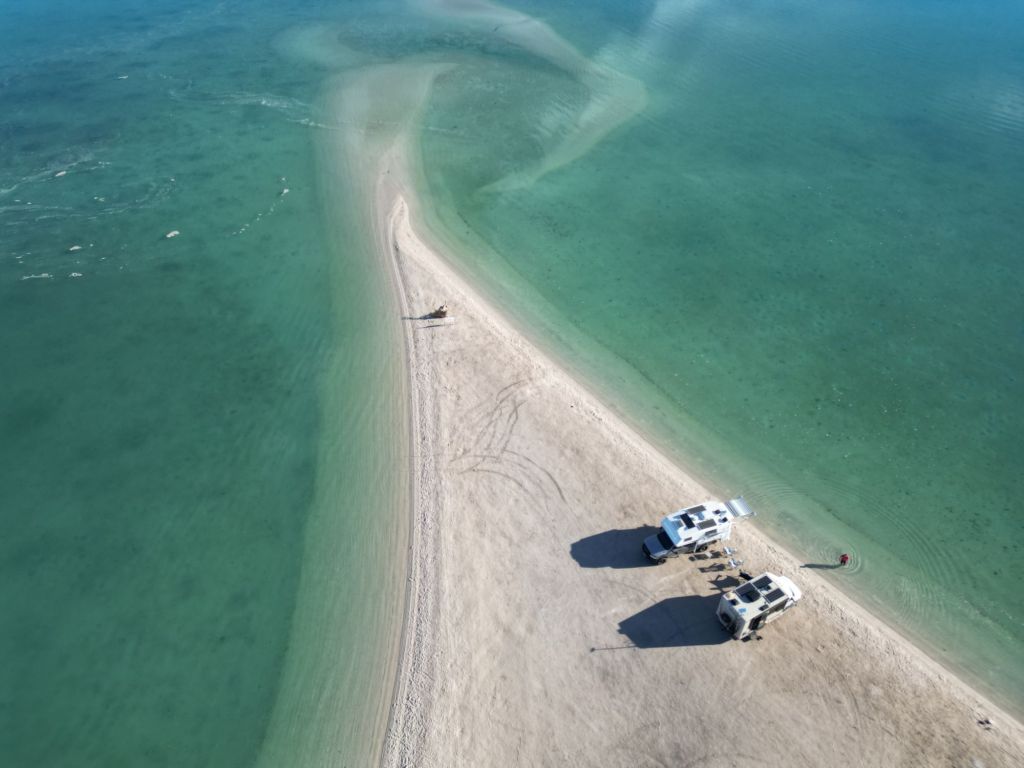
Make sure to follow along for some of the most beautiful beach camping we have done in Baja California, Mexico! Here is a sneak peak!
Love to pin, use this one!


 33andfree